
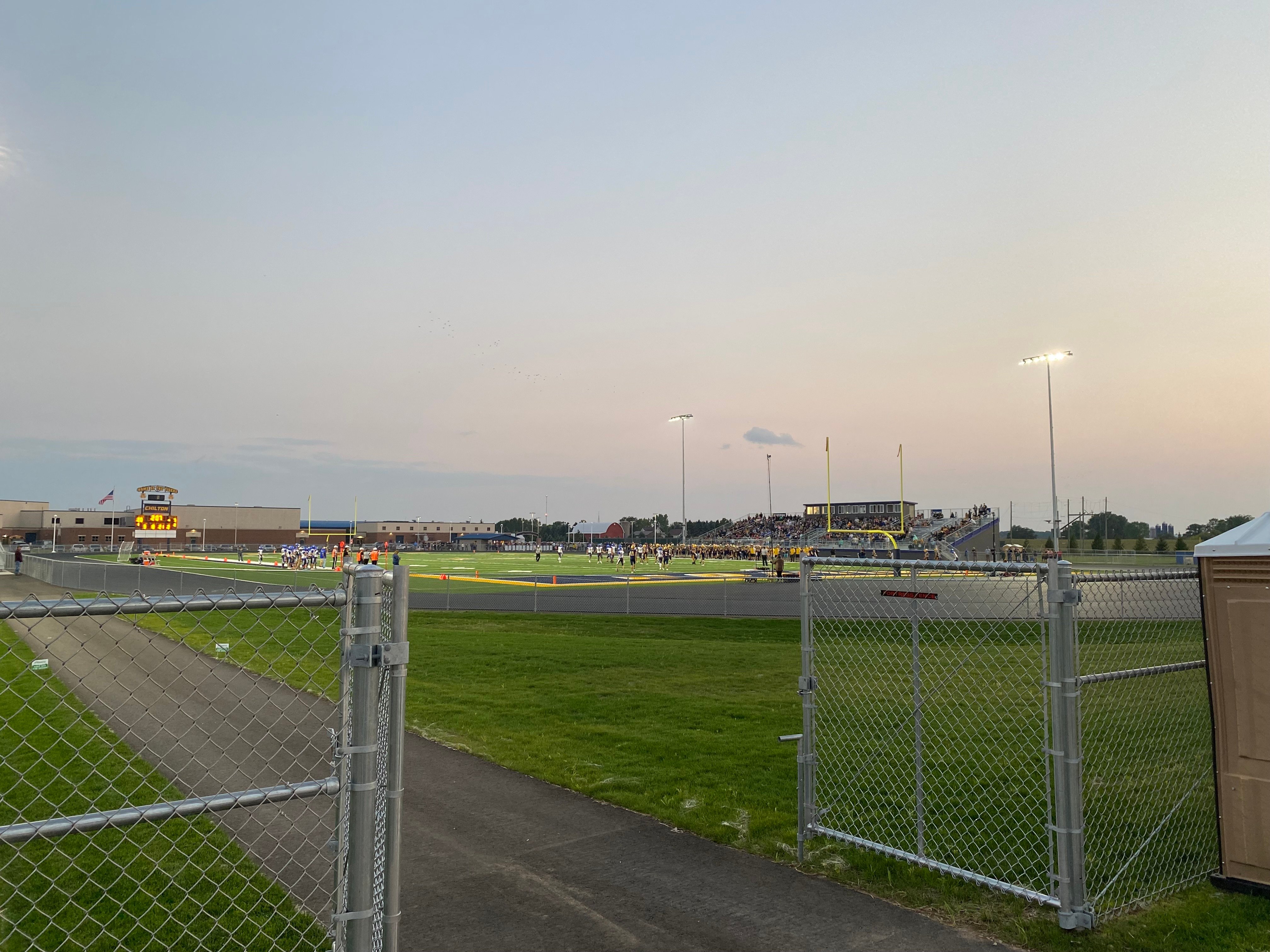
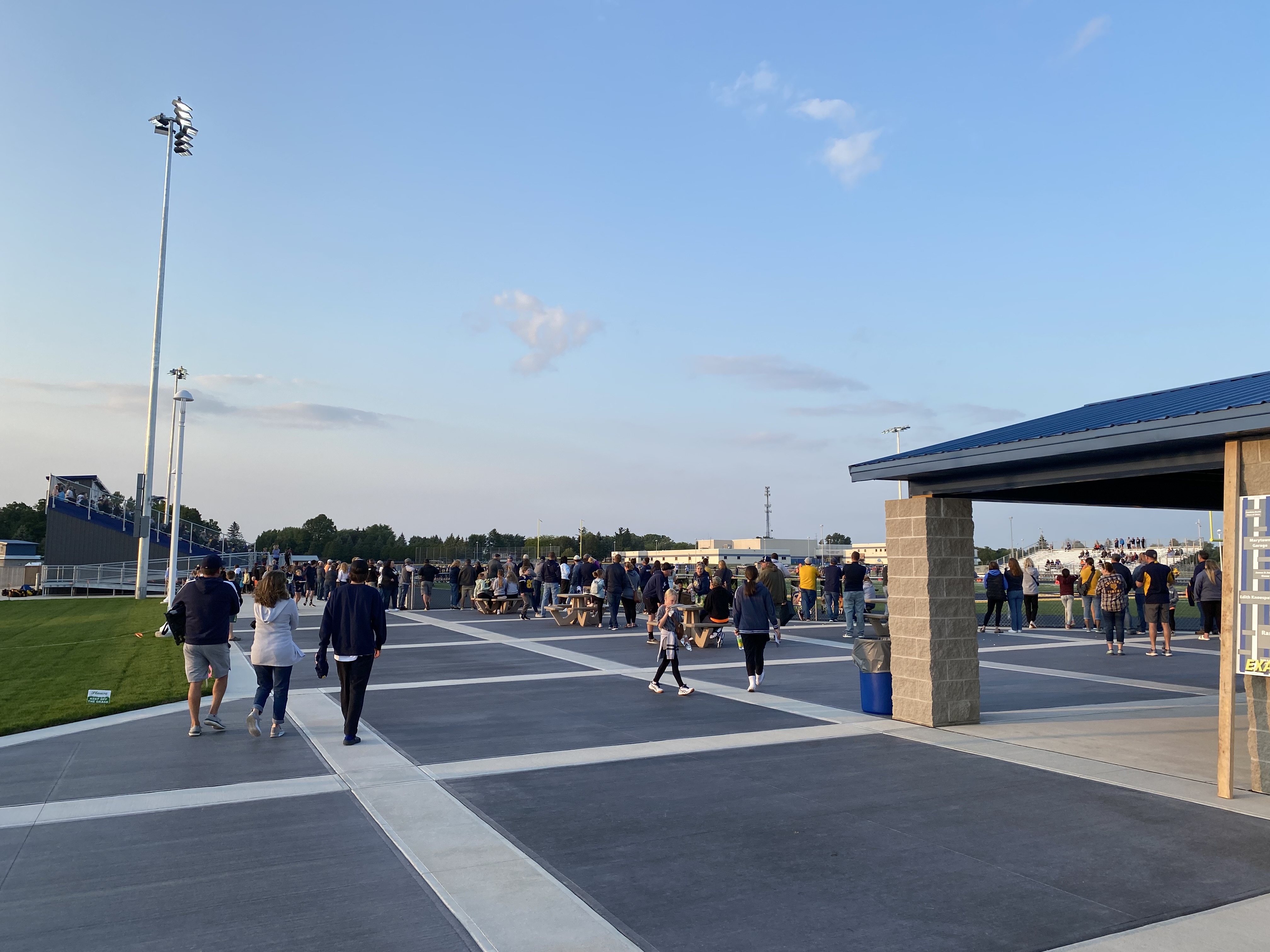

In Wisconsin, the Chilton School District, which serves about 1,050 students, and the Shawano School District, which serves more than 2,100 students, have demonstrated why athletic facilities should be planned as educational and community assets.
Based on their success, before renovating an existing stadium or building a new one, school business officials and district leaders should consider these priorities.
1. Start with safety, not sentiment.
Existing facilities often carry history, but nostalgia should not outweigh student safety.
Chilton had been using Morrissey Field for its athletic events; however, when the field became a public venue, Chilton leaders recognized concerns with student travel, inclement weather, playing surfaces, and open public access. Those issues affect supervision, emergency response, liability, and confidence.
The district determined that a new athletic complex was needed.
If renovation cannot fully solve safety, supervision, ownership, and emergency-response issues, then building a new stadium may be the more responsible path.
2. Evaluate location and campus connection.
Location drives daily usability. A stadium separated from schools may require busing, extra supervision, duplicated storage, separate restroom access, and complicated weather procedures.
The connection between the facility and the school campus and its students is also important. Kurt Krizan, Shawano superintendent, shares that Shawano's old stadium was only utilized on game days. "Our new complex will provide opportunities that extend far beyond game days, creating a space for physical education, extracurricular activities, youth programs, and community events."
When comparing renovation and new construction options, be sure to map student movement, bus circulation, team access, emergency access, and after-hours control.
3. Know what is under the field.
Drainage is one of the most important and easiest to underestimate cost drivers. Synthetic turf systems rely on engineered base layers, stormwater collection, and discharge capacity. Natural grass fields require careful grading, soil condition analyses, irrigation, and recovery time. Poor drainage leads to cancellations, surface failure, maintenance problems, and expensive corrections.
Before pricing amenities, understand soils, grading, detention requirements, storm-system tie-ins, and whether new stormwater management areas are needed.
4. Plan field orientation and site geometry early.
A playing field typically should run north-south to reduce sun glare. That requirement affects land needs, grading, track placement, seating orientation, lighting, parking, and neighboring properties. Districts sometimes fall in love with a site before confirming that it can fit a regulation field, track, event areas, safe buffers, stormwater, and future expansion. Start with the full footprint, not only the field rectangle.
5. Make the grass versus turf decision through a use lens.
Synthetic turf usually costs more upfront, but the value changes when a district considers hours of use, weather reliability, maintenance, and multi-program access.
Shawano School District determined that synthetic turf could support far more annual use than grass while reducing cancellations and opening the facility to marching band, physical education, community events, and track walking.
Still, turf should not be the automatic choice. Consider heat, replacement cycles, infill, impact absorption, maintenance equipment, sport mix, and community expectations.
6. Design utilities for today—and tomorrow.
Stadium technology now goes well beyond lights and a scoreboard. Districts plan for live streaming, Hudl-style camera systems (automated cameras that record games for coaching review, streaming, and highlights), Wi-Fi, security cameras, video boards, digital advertising, press box connectivity, and field-level power. Long conduit routes, data-distance limits, transformer capacity, and future equipment locations should be addressed during design.
A common pitfall is building for today’s budget but failing to rough in power and data for tomorrow’s needs.
7. Think through the experience of the spectators.
Grandstand placement affects more than seating capacity. Home and visitor seating, accessible routes, press box location, ticketing, restrooms, concessions, team entries, plazas, and sightlines all influence the feel and function of the facility.
Storage under grandstands can serve several activities, such as football, soccer, track, lacrosse, band, maintenance, and event staff. Avoid designing seating in isolation and consider how people move from parking lot to seat to restroom to exit.
8. Do not underestimate restrooms and concessions.
Everyone notices the field first, but code-required fixture counts, utilities, food service needs, customer lines, accessibility, and cleaning operations can significantly affect building size and cost. Restroom and concession buildings can also become community assets when designed with plazas, shaded gathering areas, and event flexibility. The mistake is treating them as add-ons rather than essential infrastructure.
9. Build the schedule backward from first use.
Fall sports do not begin in September; they typically begin in August. If a district expects a stadium to open for fall competition, bidding and contracting often need to happen the previous fall. Spring starts can work, but weather, sitework, utilities, turf lead times, inspections, and punch-list items can quickly compress the schedule.
Whenever possible, use fall for mass grading and early stormwater work so spring construction begins with momentum.
10. Communicate the long-term vision with transparency.
Stadium projects often require public support, and communities deserve more than renderings. They need to understand the need, the alternatives studied, the cost of doing nothing, and who benefits beyond varsity teams. Clear communication can turn a stadium from a perceived luxury into a shared educational and community investment. A transparent process rooted in long-term vision can rally your community.
"This complex has not only enhanced our educational environment, but has also created a community hub, bringing residents together,” says Chilton’s retired superintendent, Sue Kaphingst.
The Bottom Line
Ultimately, the best stadium projects are not driven by a single feature. They succeed because districts align site conditions, safety, student access, community use, infrastructure, budget, and schedule before construction begins. Renovation may be right when existing conditions can support those goals. New construction may be wiser when the old site forces too many compromises.
Either way, the question should remain constant: Will this facility serve students, staff, families, and the community safely and effectively for decades?