
.jpg)


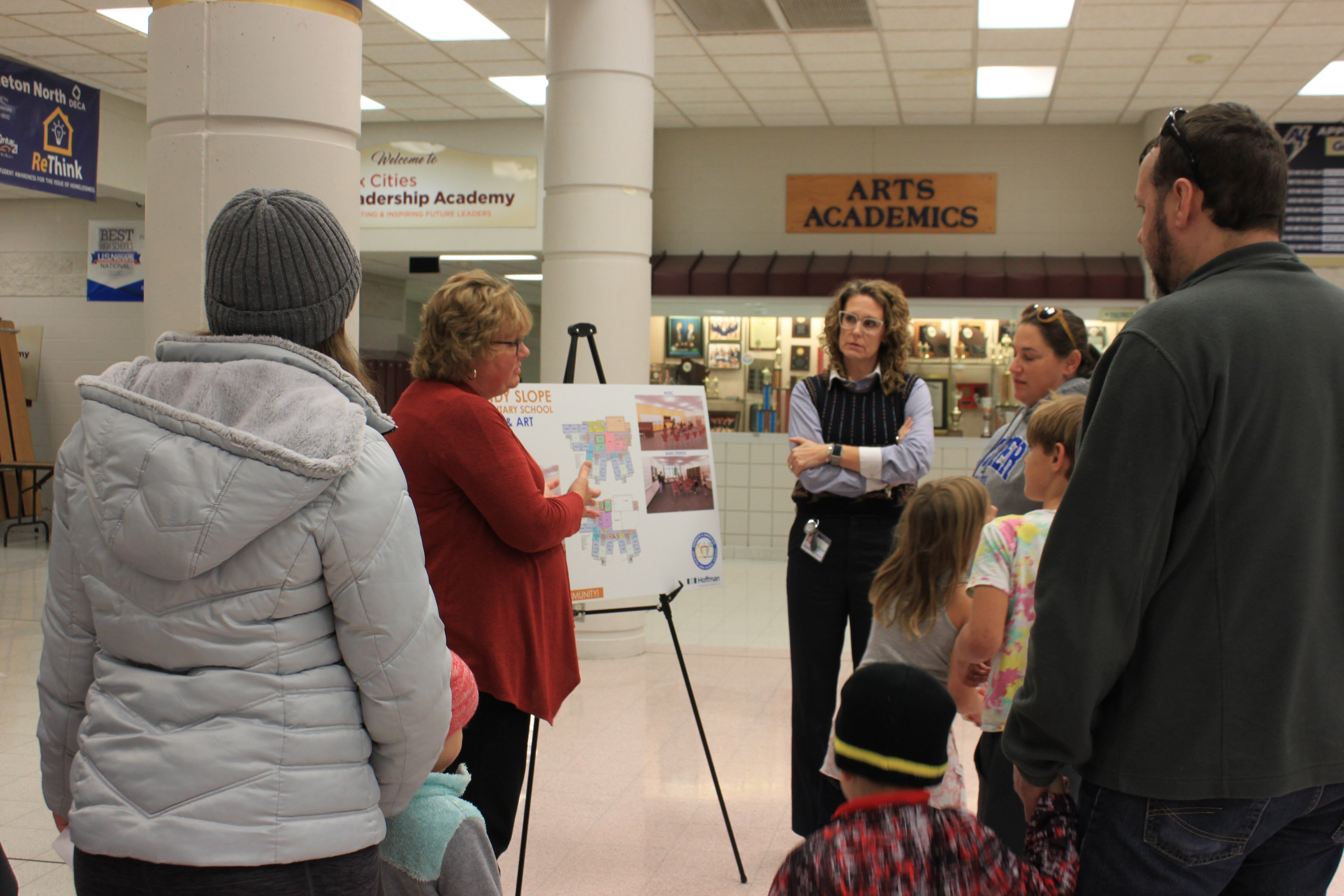
Located in Appleton, Wisconsin, Sandy Slope is the Appleton Area School District’s first new school in three decades and its first new elementary school in nearly 35 years. More importantly, it shows how a district can connect a new facility to broader system goals rather than present it as a stand-alone building project.
That distinction matters in school finance and operations, where the strongest capital projects are not justified by novelty, but by measurable need, public value, and long-term district impact.
Sandy Slope emerged from a districtwide facilities strategy that culminated in voter approval of a $129.8 million referendum in November 2022. District leaders had been monitoring growth on the northeast side of the community for years, along with capacity pressures in existing elementary schools. By the time the project advanced, the issue was no longer hypothetical. The district needed additional space, better alignment with enrollment trends, and a facility plan that could support both immediate relief and future growth.
That framing is especially important for the many school business professionals who are facing similar challenges throughout the nation. It addresses overcrowding, changing instructional needs, and districtwide planning priorities. It shows how this kind of alignment strengthens public accountability because it ties capital investment directly to service delivery, utilization, and long-term system performance.
Designing for Capacity and Program Delivery
Sandy Slope was designed to serve roughly six hundred students, with a layout intended to enhance both efficiency and flexibility. The school is organized around grade levels, with classrooms grouped around shared Extended Learning Centers.
From a business perspective, this design choice matters because it reflects an investment not only in square footage but in program delivery. Shared collaborative space can support different teaching models, improve supervision, and reduce the need for separate breakout areas distributed throughout the building.
The facility also includes art, music, STEM, special education classrooms, and a sensory gym. These are not simply amenities; they reflect the fact that school facilities increasingly must support a wider range of instructional and student service needs. For business officials involved in planning and budgeting, Sandy Slope underscores the importance of rightsizing and use-based design that addresses how programs actually operate — not just for how many classrooms a building contains.
Connecting the Facility to Community Identity
Sandy Slope also illustrates the value of aligning facility planning with community identity. The school was built on land that was once part of the historic Van Handel farm, and the district preserved elements of that history in the finished campus. The original silo, for example, remained as a visible landmark, and the school’s name honors both the site’s topography and the area’s historical one-room schoolhouse.
These decisions are more than symbolic. Capital projects funded through referendum depend on public trust, and that trust is strengthened when a district shows that it understands and respects local history and community priorities.
Managing Cost, Risk, and Delivery
The project also offers practical lessons in delivery and risk management. Sandy Slope was developed after years of collaboration, facilities analyses, and preconstruction planning. That groundwork helped the district enter the referendum phase with a clear understanding of need, scope, and cost. In a public environment, that kind of preparation can make the difference between a compelling capital case and an uncertain one.
During construction, the team had to navigate challenges familiar to any business office: inflation, supply-chain volatility, labor constraints, and the pressure to maintain budget discipline without sacrificing long-term value. The project team relied on early procurement, trade partner coordination, value engineering, and flexible contracting strategies to reduce exposure to cost escalation and scheduling disruptions.
It is important to remember that stewardship on a major construction project is not just about securing a competitive price; it is also about managing timing, procurement strategy, and risk in a volatile market.
Sustainability as a Financial Decision
Although the district did not pursue formal LEED certification, Sandy Slope was designed to a performance level comparable to LEED Silver. The building incorporates a highly efficient exterior envelope, extensive daylighting, LED lighting, low-flow fixtures, and low- or no-VOC materials.
Most notably, the school includes a geothermal heating and cooling system. That decision is especially relevant because it affects the total cost of ownership long after construction is complete. An investment in a geothermal system requires careful analysis, upfront investment, and technical coordination, but it can ultimately provide utility savings, energy stability, and potential rebate opportunities over time.
Sandy Slope demonstrates how sustainability can be framed not only as an environmental commitment, but as a long-term business decision tied to operating efficiency.
Building Public Confidence Before Groundbreaking
One of the clearest lessons from Sandy Slope is that community support must begin well before groundbreaking. By the time voters considered the referendum, the district had connected facility proposals to clear educational and operational outcomes.
Successful capital planning depends on disciplined communication. Communities need to understand not only what a district wants to build, but why the investment is necessary, how it will improve service, and what safeguards are in place to manage public funds responsibly.
Sandy Slope’s early reception suggests that this work paid off. Families, staff, and community members saw the school as the result of thoughtful planning and shared commitment rather than as a stand-alone construction project.
Key Takeaways for School Business Professionals
-
Align capital projects with districtwide strategy so the case for investment is tied to service delivery, enrollment pressures, and long-term planning.
-
Design for program delivery, not just capacity, by making sure spaces support how instruction and student services actually function.
-
Use community identity and local history to strengthen trust and help the project feel rooted in the place it serves.
-
Approach cost control as an active risk-management process that includes procurement timing, trade coordination, and flexibility.
-
Evaluate sustainability measures through a total-cost-of-ownership lens, especially when systems such as geothermal can influence long-term operating costs.
-
Build public understanding early through clear, disciplined communication before a referendum ever reaches the ballot.
For school business professionals, the most important lesson is clear: Successful school capital projects are strongest when business leadership, educational vision, community engagement, and operational planning move forward together.